
Serverless Computing in IoT:Powering the Internet of Things

“IoT” or the “Internet of Things” is a technology that enables objects used in daily life to exchange data with other objects thanks to the internet and to ensure that objects are fully synchronized. These objects may have sensors, software, and network connectivity technologies. This technology consists of web-enabled smart devices that collect, send, and act on data from environments. Internet of Things devices transfer the collected data through a gateway and share it by connecting it to a cloud system or a different end device where the data can be analyzed. Internet of Things devices perform most of their tasks without human intervention, in line with the information they receive from each other by communicating with other related devices.
How does IoT work?
We previously defined the Internet of Things (IoT) as a technology that enables physical objects such as devices, sensors, vehicles, and home appliances to connect.to communicate with each other and share data over the Internet. A typical IoT system operates through real-time data collection and data exchange.
Thing
Thing is the basic element of the IoT network. Objects are usually devices, sensors, or other physical entities. They can perform tasks like gathering and analyzing environmental information or communicating with other devices. Examples of objects include smart thermostats, smart lamps, smart cars, and industrial sensors.
Data
The main purpose of IoT is to collect, transmit and analyze data collected from objects. Objects detect data around them through various sensors and transmit it to other devices or a central server. This data may include temperature, humidity, location, speed, and vibration measurements.
People
The IoT ecosystem facilitates communication between objects and also allows for interaction with people. IoT devices can be remotely controlled, analyzed, and monitored using smartphones, tablets, or computers. IoT devices allow users to monitor data and make informed decisions.
Process
A process component is a component that manages the functionality of the IoT and orchestrates how data is processed, stored, and routed. This particular component comprises crucial features like automation, analysis, security, and data management. For example, a smart home system can automatically control the heating or cooling system when it receives data that exceeds certain temperature thresholds.
Daily life examples to better understand IoT:
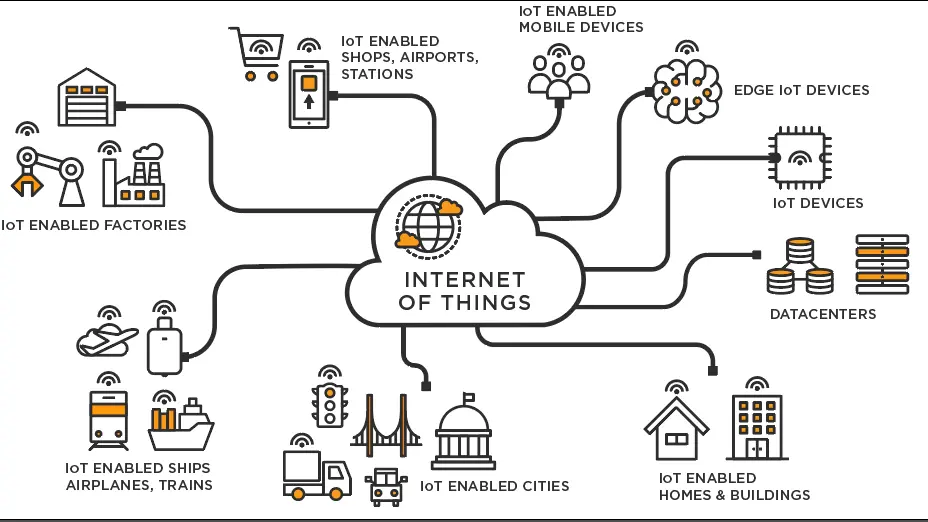
Smart Homes: Many devices in homes, such as lighting, heating, cooling, and security systems, can be controlled with IoT.
Industrial Automation: Factories and manufacturing facilities can use IoT devices to optimize production processes and increase efficiency.
Health Monitoring: Health devices such as medicine boxes, heart monitors, and fitness trackers can provide better health services to users with IoT.
Transportation: Smart traffic signals, autonomous vehicles, and file.
From our blog
Join us on a journey of digital discovery.
Web, mobile, cybersecurity, cloud, and beyond

Incident Report: Docker Service Degradation Due to Disk Exhaustion
Detailed incident report describing Docker service degradation caused by disk exhaustion in Docker Desktop’s WSL2 virtual disk (ext4.vhdx), including impact,...

Creating High-Performing Landing Pages:Best Practices for Conversions
Boost your online marketing efforts with expert tips for creating high-performing landing pages. Learn how to increase your conversion rates effectively.

The Power of Video Marketing:Engaging Your Audience
Explore the Impact of Video Marketing on Audience Engagement

AI Chatbots:Enhancing Customer Support and User Experience
In today's business landscape, customer satisfaction and providing swift responses have never been more critical. Explore how AI-powered chatbots, like those...